Blog
Lower Back Pain During Deadlifts
By Amanda Glover
Published
October - Lower Back Pain During Deadlifts
The deadlift is one of the most effective exercises for developing strength through the hips, legs and core. But if you keep experiencing lower back pain during or after deadlifts, it can be frustrating — especially when you feel like you’re doing everything “right.”
The good news is that lower back discomfort during deadlifting doesn’t necessarily mean you have damaged your back. There are several possible reasons why your lower back may be taking more load than it can currently tolerate.
As sports therapists, we often look beyond the exercise itself and consider your technique, training load, mobility, strength, recovery and previous injury history.
1. Your lower back may be doing too much work
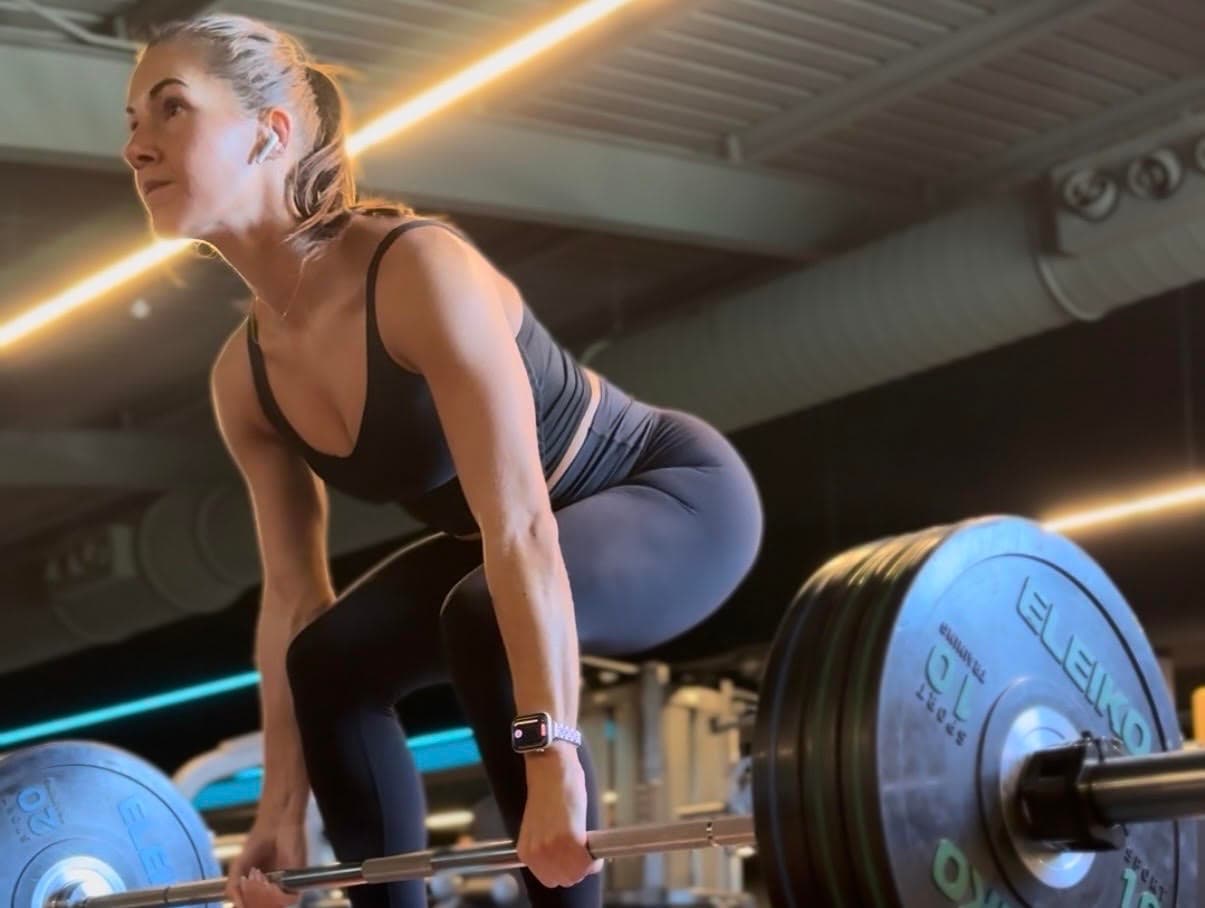
A deadlift should be a smooth movement, coordinating your hip, knees and core. Your glutes and hamstrings should help to extend the hips, whilst your core helps to stabilise your torso.
If your lower back is continually doing more work than your hips are meant to, you may feel the muscles around the lumbar spine becoming tired, tight or uncomfortable.
This can happen when you:
Start the movement with your hips too low or too high.
Lose your brace during the lift.
Not keeping the bar in close contact.
Finish the movement by excessively arching your back.
Lifting too heavy too soon.
Some muscular fatigue in the lower back can be normal when lifting. However, persistent, worsening or sharp pain needs further assessment into what's going on.
2. Your technique may change as you fatigue
Your first few repetitions may look excellent, but technique can gradually change as fatigue sets in.
You might notice your back position becoming less controlled, your hips rising early, or the bar drifting forwards. These changes increase the demands placed on your back.
So, asking yourself “Is my deadlift technique good?” isn’t always enough. Instead you should ask yourself “Can I maintain an appropriate technique throughout the entire set and under my current load?”
If your form consistently lacks control and gets worse towards the end of a set, you should reduce the weight, repetitions or total volume to help. Otherwise this can lead to an injury.
3. You may be lifting more than you can currently tolerate
Strength isn't just about what your muscles are capable of producing. Your body also needs time to adapt to the amount of stress you're putting on it. A sudden increase in weight, sets, repetitions or training frequency can be too much for your current capacity.
For example, you might normally deadlift once a week, however you might suddenly introduce additional pulling exercises, Romanian deadlifts and heavy rows into your programme. The individual exercises may be perfectly reasonable to add. The problem can be the total training load. It might be too much for your body to handle in such a short amount of time.
A useful principle is: Increase training demands gradually rather than making large jumps in volume or intensity.
4. Limited hip or ankle mobility can affect your starting position
Your deadlift doesn't happen in isolation. The position of your hips, ankles and upper back can influence how you reach the bar. If you are struggling to achieve a comfortable starting position, you may compensate elsewhere, potentially increasing movement or loading through the lower back.
However, mobility isn't always the missing piece. Not everyone needs the same range of motion to deadlift effectively. Instead of trying to force yourself into an “ideal” position, your technique should be appropriate for your individual anatomy, mobility and goals.
As a sports therapist we can assess how you move and determine whether mobility is genuinely limiting your performance and help you reach your goals.
5. Your core may need better bracing
Your trunk plays a really important role when you are deadlifting. Before starting the lift, you want to create sufficient torso stiffness so that your spine is supported while your hips and legs generate force.
A common mistake is thinking that bracing means simply “pulling your stomach in.” Instead, think about creating firm pressure or solidifying your entire midsection, front, sides and back, before you lift. Practising your bracing with lighter loads can help you achieve this before starting to lift heavier.
6. Your recovery may not match your training
Sometimes the problem isn't the deadlift itself, recovery is so so so important! Poor sleep, inadequate recovery, high overall training volume and poor nutrition can all affect how well you tolerate exercise. If you repeatedly train hard without allowing your body enough time to recover, loads that you were lifting before may start to feel even harder. Always consider your whole training week, instead of just specific days. You should always allow time for your body to rest and recover otherwise you will increase chances of injury.
7. Previous injuries can influence how you move
If you've previously injured your lower back, hip or hamstring, you may unconsciously alter how you do a deadlift. You might shift your weight, move differently through your hips or brace more cautiously because you're anticipating discomfort. That doesn't necessarily mean you shouldn't deadlift. Slowly introducing deadlifts after certain injuries can be important when rebuilding strength and confidence. If you do feel as if you are compensating when deadlift, see a sports therapist to help address this issue.
Do I need to stop deadlifting if my back hurts?
Not necessarily. Pain doesn't automatically mean that an exercise is causing damage, and completely avoiding movement isn't always the best solution. However, repeatedly pushing through significant or worsening pain isn't a good strategy either.
A sensible approach may be to temporarily modify the exercise by changing the:
Deduce the weight
Decrease the number of repetitions
Range of motion
Deadlift variation
Training frequency
Increase rest periods
For example, some people may initially tolerate a lighter Romanian deadlift, elevated deadlift or controlled hip-hinge variation better than a heavy conventional deadlift. The goal isn't necessarily to avoid loading your back forever. It's to find an appropriate level of loading that you can gradually build from. If you are questioning whether you should stop doing deadlifts, get your back assessed by a sports therapist so you can train with peace of mind.
When should you get your back pain assessed?
Most episodes of lower back pain aren't caused by a serious underlying condition, but certain symptoms warrant a medical assessment. Seek urgent medical attention if back pain is accompanied by symptoms such as significant or progressive weakness, numbness around the groin or saddle area, or new problems controlling your bladder or bowel.
You should also consider us if your pain is persistent, repeatedly returning, significantly limiting your training, or getting progressively worse. As sports therapists, we can assess your movement, training programme and symptoms and help identify appropriate modifications.
The takeaway
Lower back pain during deadlifts isn't automatically a sign that you're “doing deadlifts wrong.” It may be related to technique, fatigue, training load, bracing, mobility, recovery, previous injury, or a combination of several factors. Rather than immediately abandoning the deadlift, look at how much you're lifting, how you're moving, how you're recovering and how your symptoms respond to different levels of load. The best programme is one that challenges you enough to build strength while remaining appropriate for your current capacity. If your lower back pain keeps returning, getting a personalised assessment is often more useful than simply being told to “keep your back straight.”